


By Dr. Joseph King | King LASIK Dr. King is an ophthalmologist at King LASIK, serving patients in Seattle, Portland, Tacoma, Olympia, Tri-Cities, Everett, Vancouver, and the Scottsdale/Phoenix area.
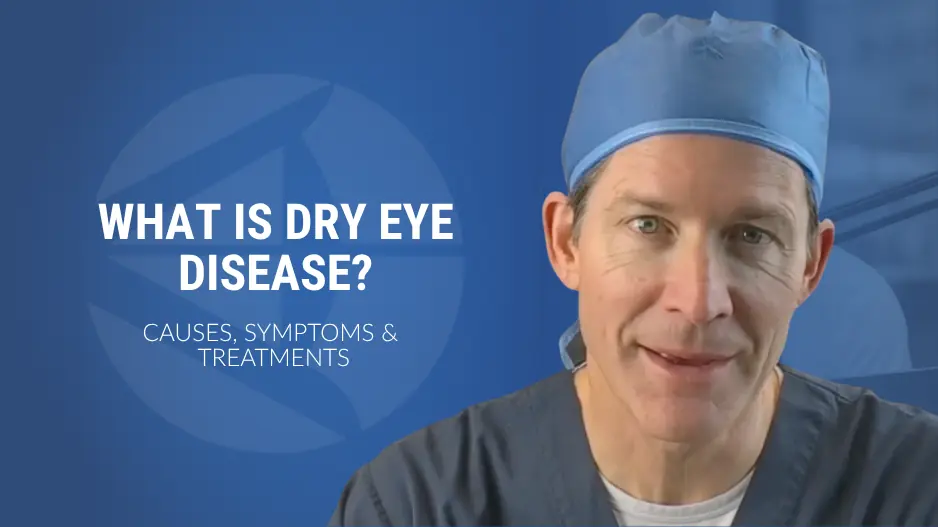
If your eyes constantly feel burning, scratchy, or irritated, you are not alone. Dry eye disease is one of the most common conditions seen in eye care practices today, affecting millions of people worldwide. In this episode of Eye Essentials, Dr. Joseph King breaks down exactly what dry eye is, what causes it, and how it can be treated effectively.
How Tears Actually Work
Most people assume tears are just salty water, but your tear film is actually made up of three distinct layers, each with a specific job.
- The oily outer layer comes from meibomian glands in your eyelids and acts as a seal to slow evaporation.
- The watery middle layer comes from the lacrimal glands and makes up the bulk of what we think of as tears. It keeps the eye moist and flushes away debris.
- The mucous inner layer comes from the conjunctiva and helps tears spread evenly across the eye surface.
When any part of this system breaks down, dry eye can develop. The condition occurs when your eyes do not produce enough tears, do not produce the right type of tears, or when tears evaporate too quickly.
Common Symptoms of Dry Eye
Dry eye can feel different from person to person, but common symptoms include:
- A stinging or burning sensation
- A scratchy, gritty feeling, like something is stuck in the eye
- Blurred vision, especially during reading or screen use
- Redness, particularly in windy conditions or around smoke
- Discomfort or inability to wear contact lenses
One surprising symptom: excessively watery eyes. When the eye surface is dry and irritated, it triggers a reflex response that floods the eye with tears. However, these reflex tears lack the proper balance of all three layers, so the eye still feels dry even while tearing up.
What Causes Dry Eye?
Several factors can disrupt the tear film and lead to dry eye disease:
- Age: Tear production naturally decreases over time, particularly in women after menopause.
- Medical conditions: Sjogren’s syndrome, rheumatoid arthritis, and thyroid disease are known contributors.
- Eyelid problems: Blepharitis, a condition where the meibomian glands become clogged, is one of the most common causes.
- Screen time: Staring at devices reduces your blink rate from a normal 15 to 20 blinks per minute down to just 5 to 7, which significantly reduces tear distribution.
- Environment: Dry climates, air conditioning, heating, wind, and smoke all accelerate tear evaporation.
- Medications: Antihistamines, blood pressure medications, antidepressants, and sleeping pills can all reduce tear production.
- Contact lenses and LASIK surgery: Both can be triggers for dry eye in some patients.
If you are considering LASIK and are concerned about dry eye, we can evaluate your eye health and discuss whether LASIK is right for you.
Treatment Options for Dry Eye
The good news is that dry eye is highly treatable. There are multiple approaches depending on the severity and cause:
Artificial Tears
Over-the-counter eye drops are the most common first step. If you find yourself using them more than six times per day, opt for preservative-free formulas to avoid further irritation.
Punctal Plugs
These are tiny silicone plugs inserted into the drainage openings of the eyelids to help tears stay on the eye surface longer. The in-office procedure takes just a minute and is fully reversible.
Prescription Eye Drops
Certain prescription drops stimulate your eyes to produce more of their own natural tears. These typically take several weeks to reach full effectiveness.
Warm Compresses and Eyelid Care
For meibomian gland dysfunction, applying warm compresses for five to ten minutes twice daily helps melt the oil so it can flow freely. This is often combined with eyelid massage and specialized eyelid cleansers.
As Dr. King notes, the best outcomes often come from combining approaches rather than relying on just one treatment.
Daily Habits That Make a Difference
Beyond medical treatment, a few lifestyle changes can significantly reduce dry eye symptoms:
- Use a humidifier at home, especially during winter months
- Follow the 20/20/20 rule when using screens: every 20 minutes, look at something 20 feet away for 20 seconds
- Position your computer screen slightly below eye level
- Wear wraparound sunglasses outdoors to shield from wind
- Apply lubricating eye ointment at bedtime if you wake up with dry, scratchy eyes
Ready to Get Relief from Dry Eye?
You do not have to live with the discomfort of dry eye disease. A proper evaluation by an eye care professional is the first step toward building a treatment plan that actually works for you.
With locations serving Seattle, Portland, Tacoma, Olympia, Tri-Cities, Everett, Vancouver, and the Scottsdale/Phoenix area, our team is here to help. Schedule a consultation today and take the first step toward clearer, more comfortable vision.